Disney Alaska Cruise: A Journey Like No Other
This post contains affiliate links, including Amazon affiliate links. If you book or buy something through one of them, I may earn a small commission at no extra cost to you. As an Amazon Associate I earn from qualifying purchases. Captain J.J. notes that First Mate Jon recommends only what he has personally used and would choose again. This is the minimum acceptable standard. Full disclosure here.
An Alaska Disney Cruise Is Definitely Different
We have sailed Disney Cruise Line multiple times. The Wonder, the Wish, the Fantasy. We know the embarkation drill, the rotational dining rhythm, the specific joy of Palo brunch when you finally get the timing right. We thought we knew what a Disney cruise felt like. Alaska changed that assumption.
The Disney Wonder repositioning cruise we’d done a year before that traversed through the Haro Strait & Boundary Pass might have prepared us. It didn’t. Nothing really prepares you for what happens when the ship slides into Endicott Arm Fjord and the walls of the world start closing in around you. The waterway narrows. The mountains rise. The icebergs start appearing. Small at first, then bigger, then everywhere. The temperature drops and the wind picks up and you realize you are standing on the deck of a Disney ship in one of the most remote places on earth and it is absolutely, completely worth everything you paid to be there.
This guide is what we wished we’d had before we sailed. We completed the 7-night Disney Alaska itinerary aboard the Disney Magic in late May and early June of 2026, sailing round-trip from Vancouver through the Inside Passage to Skagway, Icy Strait Point, Ketchikan, and Glacier Day at Dawes Glacier.
Is a Disney Alaska Cruise Worth the Money?
Let’s address this first. A Disney Alaska cruise is expensive. A 7-night sailing for two adults can run somewhere between $4,000 and $12,000 before airfare, depending on when you book and what’s available. As of this writing, you can find last-minute Disney Alaska deals that make this feel like a bargain. We cover full Alaska cruise costs and budgeting strategy in a separate post.
What you get for that price is harder to quantify than a simple cost-per-night calculation. Disney’s rotational dining means you eat in a different restaurant each night with the same serving team following you through the rotation. After three nights they know that Gynnie takes her coffee black and that Jon likes a having a ginger ale diner. The Broadway-caliber shows in the Walt Disney Theatre are legitimately good. The service is what Disney Cruise Line is known for and holds up even when the weather is rough.
Then there’s what Alaska adds on top of all of that. Glacier Day. Wildlife that you didn’t drive to see or pay extra to find, it just appears, off the bow, while you’re standing there. Ports that are actual towns with an actual history, not constructed shore excursion zones. And the scenery, which is the kind that doesn’t translate to photos. You have to be there.
Is it worth it? For us, it was. Skip Alaska if you want a pool and beach cruise, the kind where you lay out and nap on the pool deck with guaranteed warm weather. Book it if you want to see something you won’t see anywhere else without moving there. Disney does Alaska as well as anyone sailing these waters.
Alaska Is Not a Caribbean Cruise
On a Caribbean sailing, the ship is the destination for a significant portion of guests, at least for us it is. The pool, the deck parties, the ships theming, that’s a core part of what people are there for. Alaska doesn’t work that way. While you still get all the above, what you’re actually there for is outside the ship, and a lot of it happens while you’re underway.
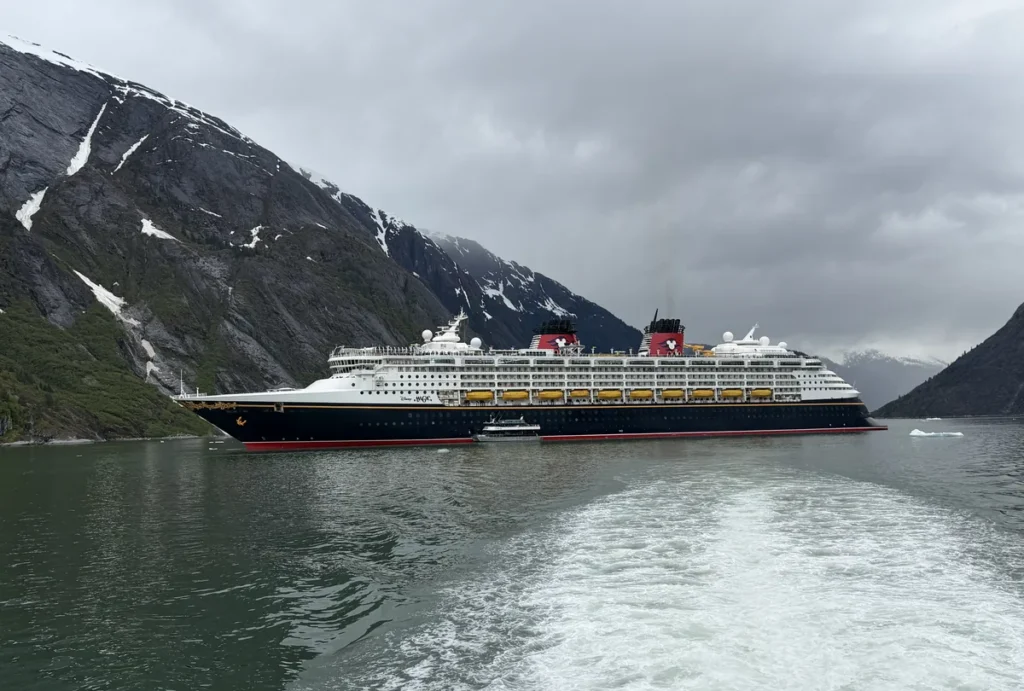
That means a different way of spending your time. Sea days in Alaska are not rest days. They’re the days when you’re on deck watching the Inside Passage slide past, or you’re listening to the naturalist explain what you’re about to see on Glacier Day, or you’re standing at the railing at because someone spotted a humpback off the port bow. The internal activities are still there, trivia, shows, the pools, bingo, and all of it. But if you spend your Alaska sea days the same way you’d spend a Caribbean sea day, you’ll miss a significant part of what you paid for.
Weather and What to Expect
Weather is the other adjustment. Alaska in the summer is not cold in a dangerous way. It’s cold in a layered-clothing way. June, July, and August average highs in the upper 50s to upper 60s Fahrenheit in the ports. On Glacier Day in Endicott Arm, it’s colder than that, especially with wind. You will want a real jacket, real gloves, and a hat. None of this is hardship. It’s just different from what most Disney Cruise regulars pack.
Rain is also part of Alaska. Southeast Alaska gets significant rainfall, and it will likely rain at least once during your sailing, it did for us. The ports are still worth walking in the rain. Ketchikan in particular does not suffer for it. Pack a rain jacket and enjoy it.
What doesn’t change is everything Disney does well on the ship itself. The food quality, the entertainment, the character experiences, the crew attentiveness. Alaska doesn’t diminish any of that. The ship is still the ship. It just happens to be parked next to a glacier instead of a private island.
We sailed at the end of May / early June. There was still lots of snow on the mountains. The weather was really good for the most part. We had very little rain. Our port visit to Ketchikan was unseasonably warm with a high of 78 F degrees.
What You’ll Actually Experience: The Itinerary
This isn’t a day-by-day recap. There are already enough of those on the internet. This is a section-by-section breakdown of each major experience on the 7-night sailing and what you actually need to know before you get there.
Embarkation: Vancouver
Canada Place is a good cruise terminal. It’s modern, well-organized, and the staff runs an efficient boarding operation. It’s not Port Canaveral, which most Disney Cruise Line regulars treat as a home port with all the comfort that implies. Both embarkation and debarkation were smooth.
If you’re flying into Vancouver, we’d suggest arriving the day before your sailing. The logistics of international travel plus embarkation day are tight if you’re flying in same-day, and missing a DCL departure because of a flight delay into Vancouver is a painful way to start a vacation. Pre-cruise hotel options in Vancouver are genuinely good. We stayed at the Fairmont Vancouver Airport Hotel the night before embarkation and took the Disney Cruise Line transportation from the airport to Canada Place the next morning. If you can afford it, a couple of days in Vancouver would be great as there is so much to do in.
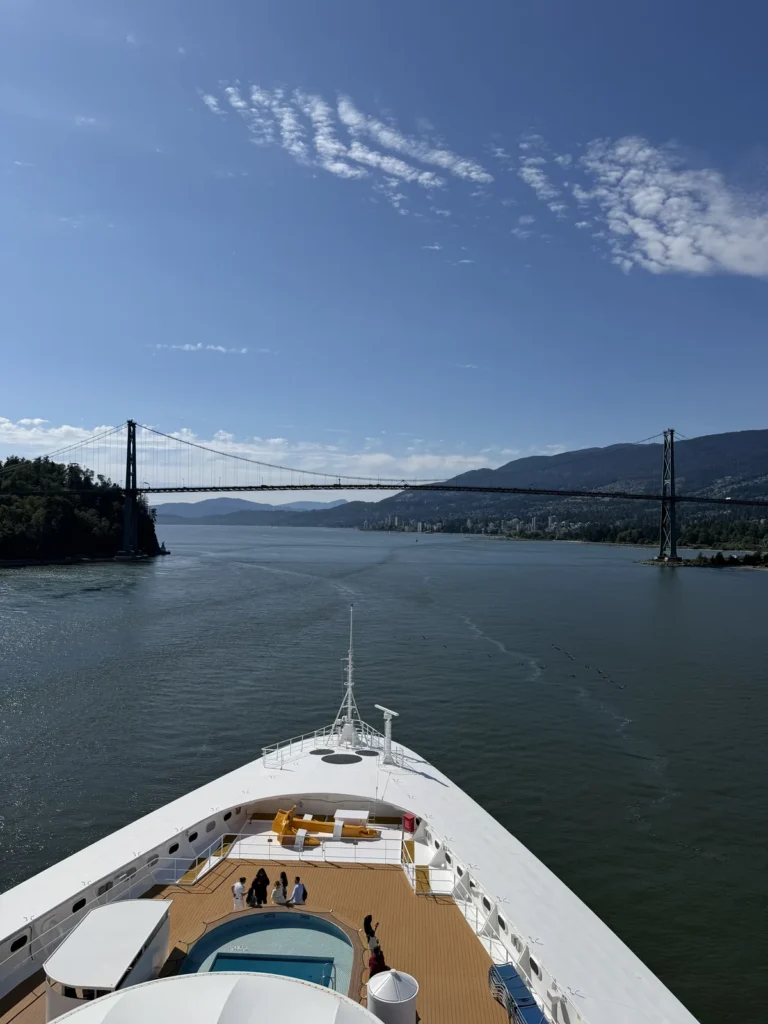
Embarkation day on Disney is the same wherever you board. There is a moment when you hand over your bags, walk through security, and step into the terminal, and it shifts into something that feels like the start of an event rather than the start of a trip. That part is consistent. Trust the process, eat at Cabanas when you board, and start getting your bearings before the crowds hit.
The Sea Day: Inside Passage
The Inside Passage sea day is one of the more underrated parts of the Alaska sailing.
The route from Vancouver north runs through a protected waterway of islands, inlets, and channels that makes the sailing unusually calm for ocean travel. You only occasionally cross open water. You’re threading through one of the most beautiful coastal landscapes in North America, and the ship is doing it at a pace where you can actually watch it happen.
Disney brings naturalists aboard for Alaska sailings. The programming they run with morning talks, deck commentary, informal Q&As, is genuinely useful for understanding what you’re seeing. We’d suggest checking the Navigator app on your first day at sea and building the naturalist sessions into your schedule before other activities claim those time slots.
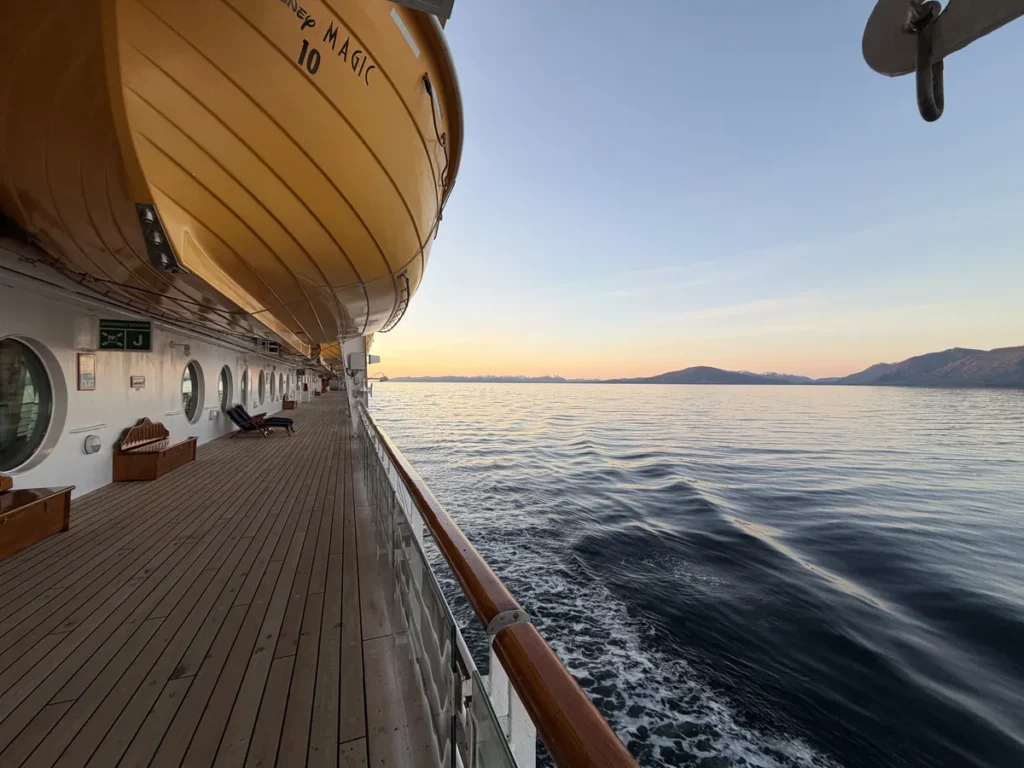
Wildlife watching from the ship is also real. Humpback whales surface in the Inside Passage. Bald eagles are common enough that spotting one stops being exciting around Day 3, which is a sentence we did not expect to write. Orcas can be seen on this sailing. Our friends who joined us on the cruise saw Orcas from outside on deck 10. There are also seals, otters, and the occasional bears. We didn’t see any bears unfortunately. Bring binoculars and park yourself on an open deck.
The forward deck positions on Deck 10 are excellent for wildlife spotting. Deck 4 gives you a lower, closer perspective. In colder conditions, the indoor lounges with forward-facing windows on upper decks give you a warm option without sacrificing the view.
Glacier Day: Endicott Arm Fjord and Dawes Glacier
This is the centerpiece of the sailing. Everything else is excellent. This is the thing.
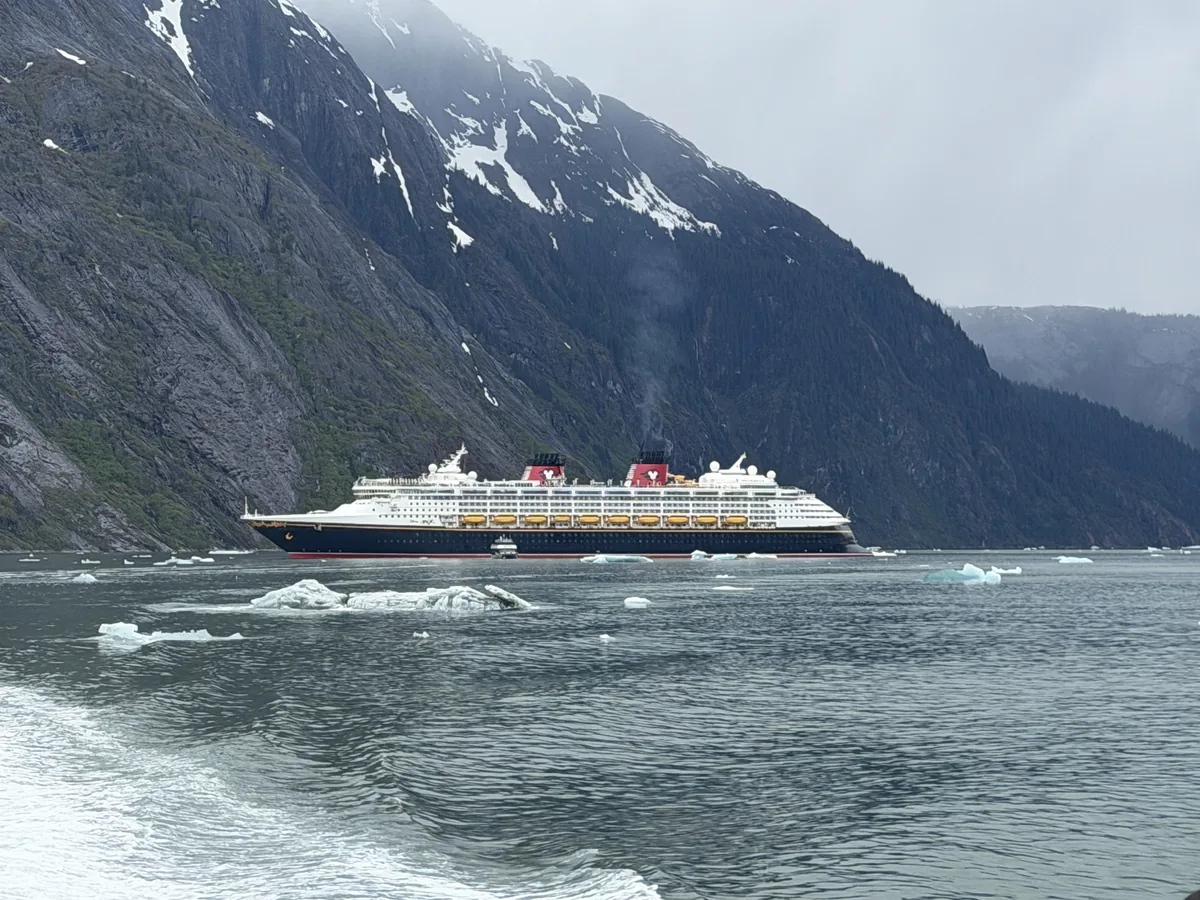
We entered Endicott Arm around noon. The first thing you notice is that the waterway starts to narrow. Not dramatically, not all at once, but gradually and then unmistakably. The mountains on either side rise higher as the passage gets tighter, and at some point your sense of scale recalibrates. The ship, which felt large in the open water of the Inside Passage, starts to feel small. Then smaller. Then genuinely inconsequential against what’s around it.
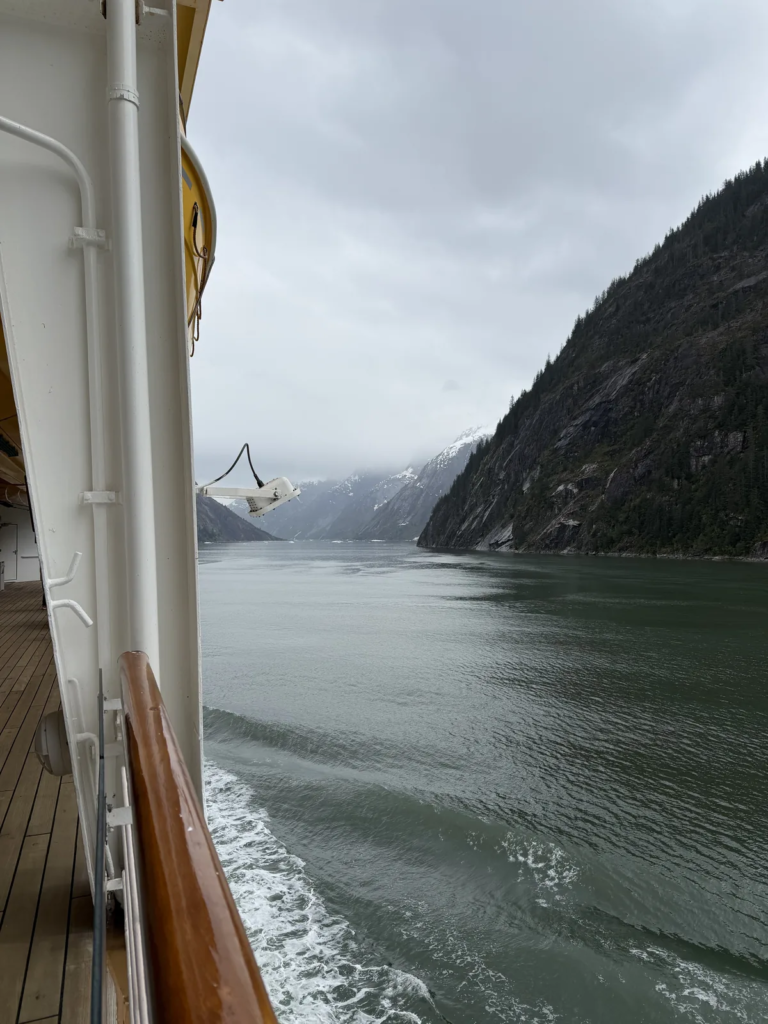
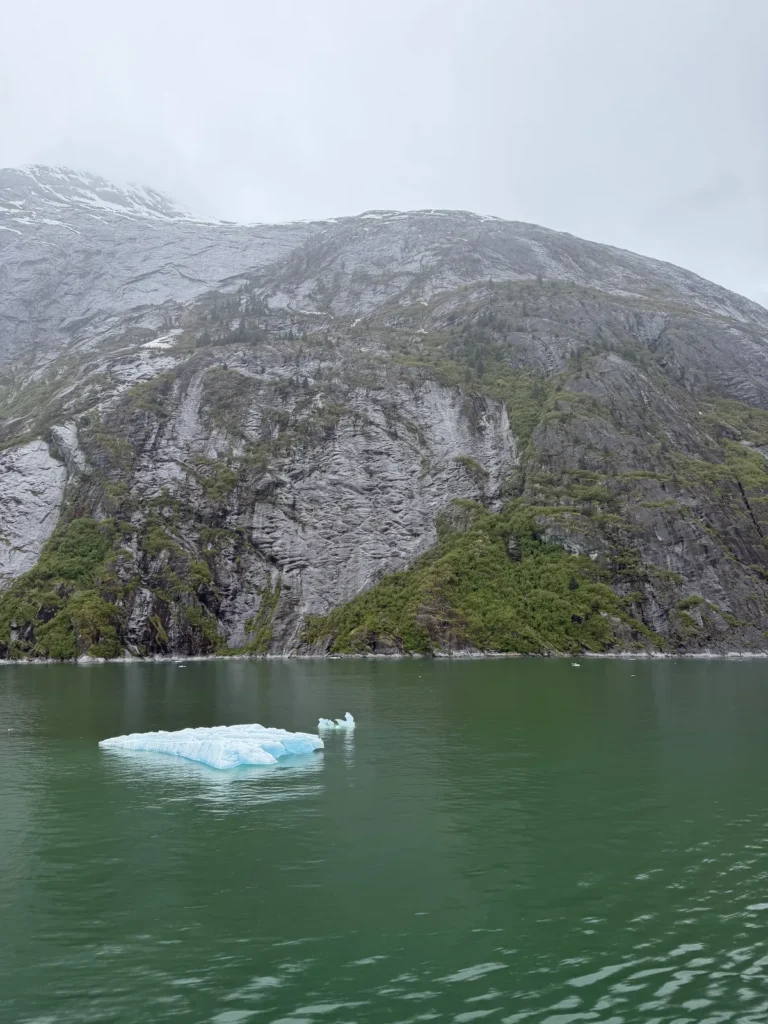
The ice comes in stages. Small chunks appear first, floating past the hull with a kind of quiet indifference. Then larger pieces, some of them deep blue-green in the centers where the compression has pushed all the air out and left something that looks almost luminous. The frequency increases steadily as you move deeper into the fjord. The icebergs are not small. Standing at the railing watching them slide past, you start doing involuntary size estimates.
Waterfalls are everywhere inside the fjord. Not occasional features of the scenery. They’re everywhere. Coming off every ridgeline, dropping hundreds of feet into the water, visible in every direction you look. In May the snowmelt is still running hard and the falls are at something close to peak volume.
The wind inside the fjord has opinions. It’s cold, it’s consistent, and it will find the gap between your collar and your hat if you give it one. We wore base layers, a mid-layer, a waterproof outer layer, gloves, and a hat. People on deck without gloves and a hat don’t last long outside. Pack accordingly.
The Glacier Tender Excursion
We arrived several miles from the glacier itself. From there, Disney runs glacier viewing tender boats to bring guests closer to the ice field for a better look at Dawes Glacier. Getting on one of those tenders is absolutely worth doing. The glacier from the ship is impressive. The glacier from a tender boat at closer range is a different thing entirely. You’re near enough to hear the calving as cracking of ice under its own pressure, occasionally punctuated by something that sounds like a rifle shot when a section drops into the water. The sound carries across the water in a way that stays with you.
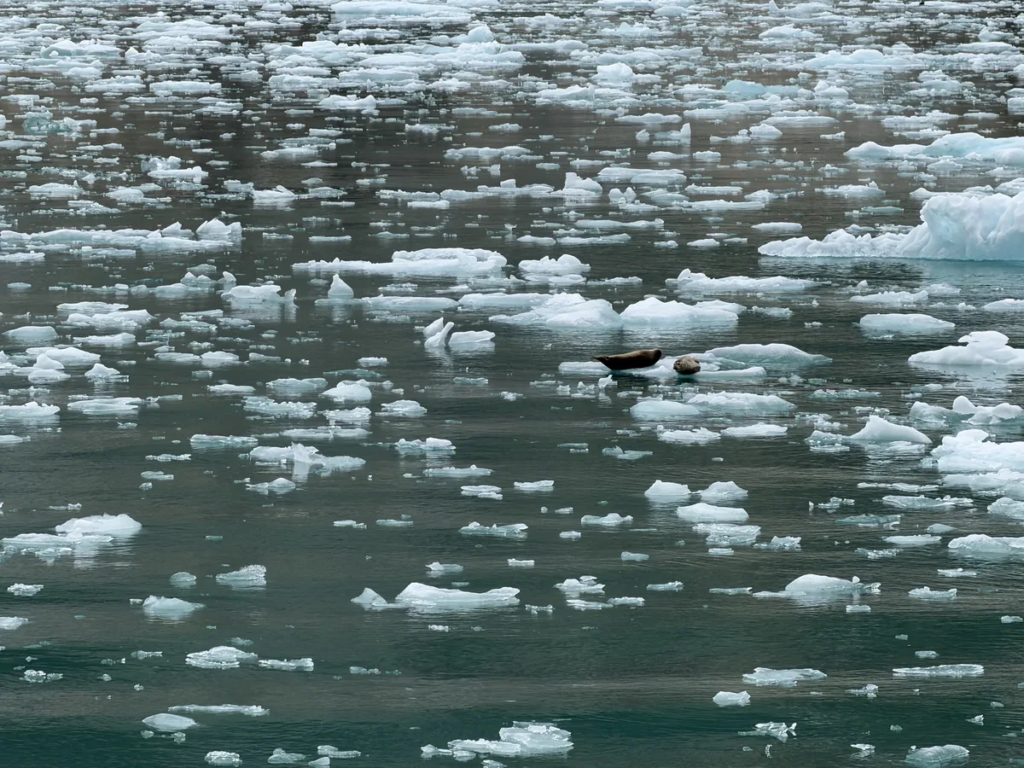
Harbor seals use the ice floes around the glacier as resting spots. We saw them on multiple floes during the tender approach, adults and pups, utterly uninterested in the boat full of tourists pointing cameras at them. Whether you’ll see whales on Glacier Day depends on the day. We did get to see a humpback surfacing on our way back.
The Naturalist on the ship provided commentary on the glacier’s retreat over time, the mechanics of how glaciers move and calve, and the local ecology of the fjord. It was the kind of narration that adds a layer to what you’re looking at. Even if you’re not someone who seeks out educational programming on a cruise, consider listening in.
Best deck positions for Glacier Day:
- Deck 10 forward: the best overall position for the approach. Get there early.
- Deck 4 port and starboard sides: good for the fjord transit when you want a lower angle
- Upper deck indoor forward lounges: for when it gets too cold to stand outside but you still want to watch
Camera and gear notes, charge everything the night before. Cold temperatures drain batteries faster than normal. Bring a backup battery for your phone. A telephoto lens matters for glacier and wildlife shots from any distance. Binoculars are required for this cruise itinerary.
If you want to see about our Dawes glacier viewing, our Stikine Icecap Glacier Viewing post has all the details and pictures, including our small boat excursion to the glacier.
One honest note, not every Disney Alaska sailing reaches Dawes Glacier. Ice conditions and weather determine access, and Disney makes the call. We got in. Some sailings don’t. It’s worth knowing that going in.
Skagway
Skagway is a Gold Rush town that knows what it is and has made peace with it. The main street is a curated version of its 1898 self, with the buildings and the boardwalks and the gift shops selling gold-panning kits and smoked salmon. It is, genuinely, charming.
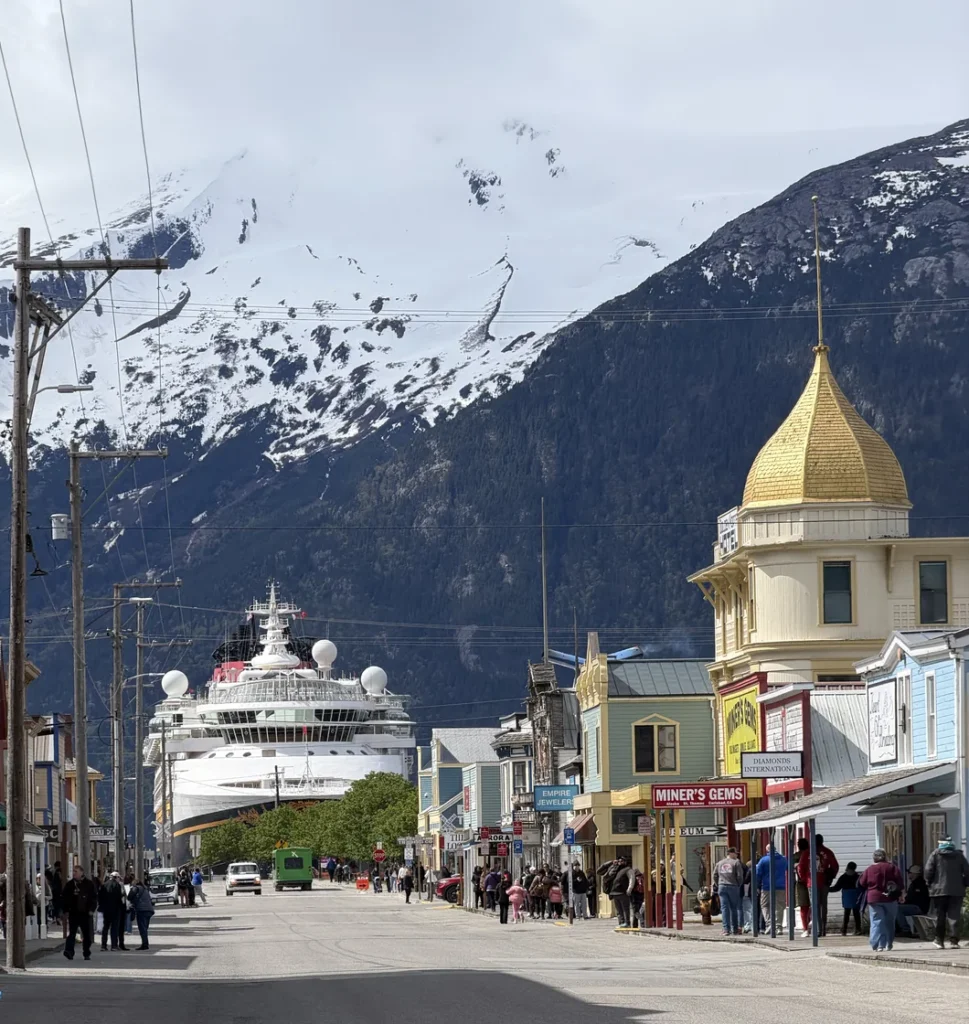
The White Pass and Yukon Route Railway is the excursion everyone recommends and the one we’d recommend too. The narrow-gauge line climbs through scenery that is difficult to describe accurately to someone who hasn’t seen it. Steep switchbacks, mountain ledges, views back down the valley to the ship sitting in the harbor far below. It takes roughly three hours round trip. Book it before you sail. It sells out.
Skagway is also walkable without a booked excursion. The ship docks close to town and the main street is a short walk. If you want to skip the railway and just walk the town, browse the shops, and find somewhere to eat, that’s a reasonable way to spend the port day. The town is small enough that you won’t feel like you’re missing hidden layers.
If you want the full picture on Skagway, what to book, what to skip, and what we actually did with our day? The Skagway port guide has it all.
Icy Strait Point
Icy Strait Point is operated by the Huna Tlingit people and it feels different from every other port on the Alaska sailing. It’s quieter, less developed, and more deliberately focused on the natural environment and the Native Alaskan cultural experience it was built around. There’s no downtown to walk. The port is the destination.
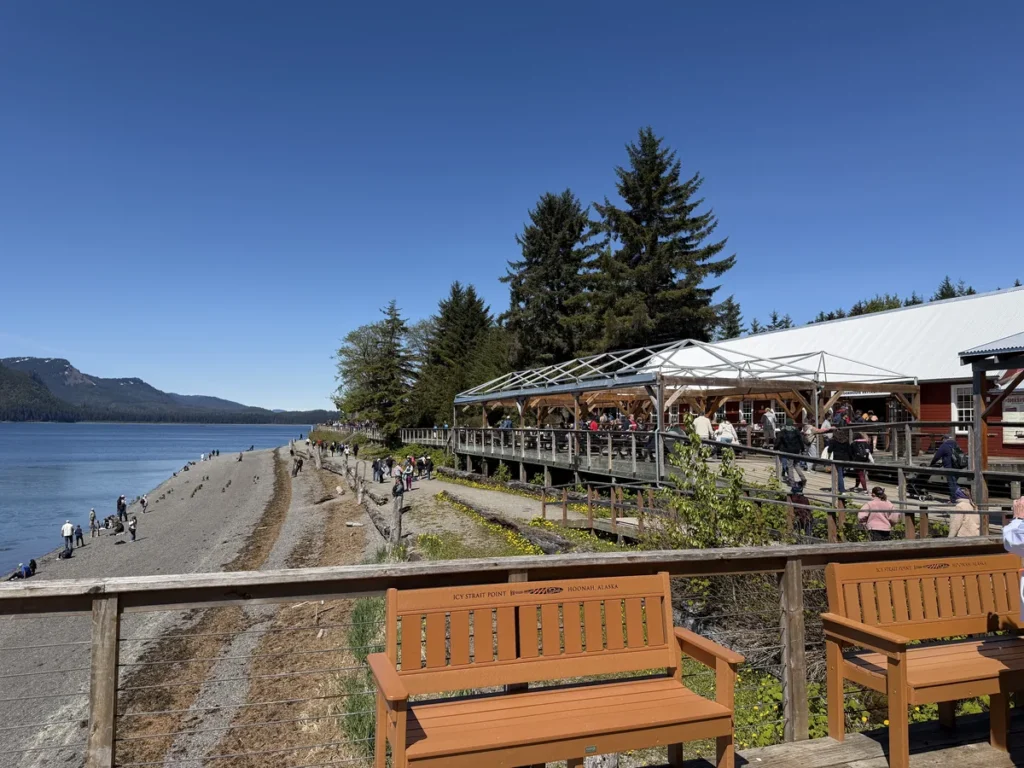
The ZipRider is the headline attraction. A long zip line from a ridge down toward the water. It’s fun in the way that zip lines are fun. Whether it’s worth the excursion price is a personal calculation based on how much you enjoy zip lines.
The whale watching at Icy Strait Point is a more compelling case. Humpback whales are reliably present in the Icy Strait waters in summer, and the boats go out knowing where to look.
The cultural center at the port covers Huna Tlingit history and is worth the time even if you have a full excursion scheduled. The walking trails along the water are accessible without booking anything. The restaurants at the cannery building is a reasonable lunch option if you’re staying near the port.
Icy Strait Point is not for everyone. If you want the full shore excursion experience with maximum options, Skagway and Ketchikan will serve you better. If you want a quieter, more nature-focused port day, Icy Strait is the place.
If you want the full breakdown on excursions, food, and what we actually did with our day at Icy Strait Point, the Icy Strait Point port guide has it.
Ketchikan
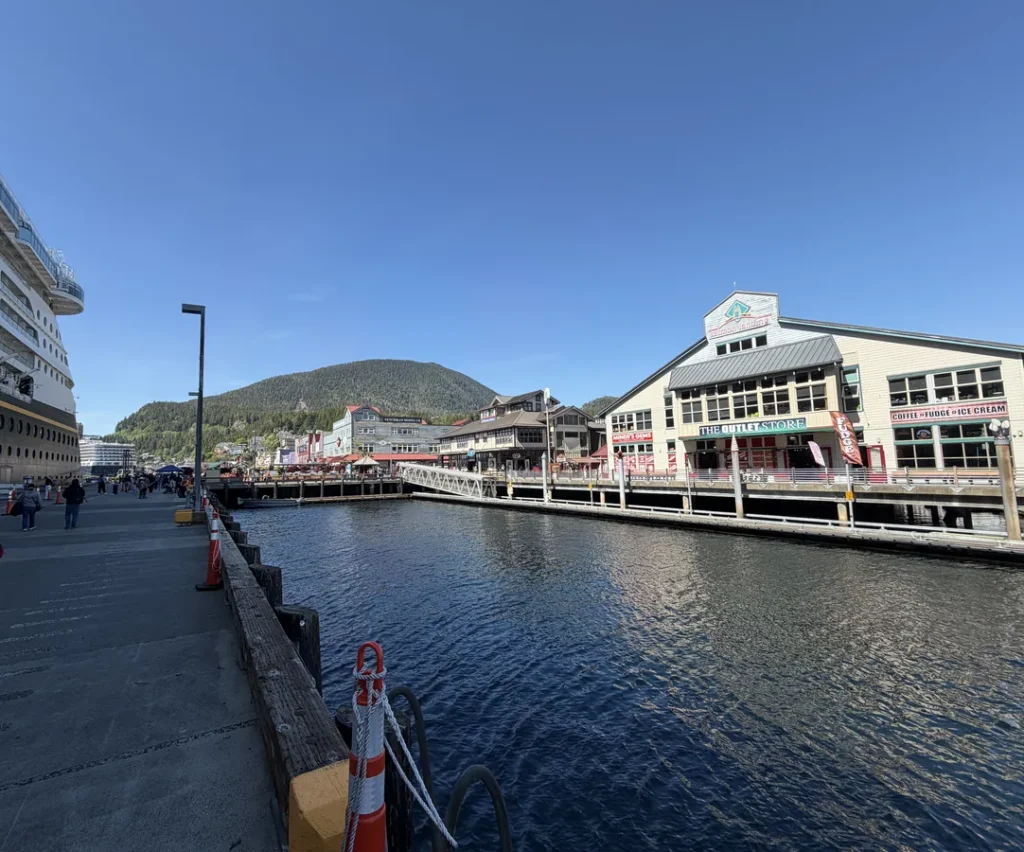
Ketchikan is the most immediately livable of the Alaska ports. It has a real downtown, real restaurants, real coffee shops, and the feeling of a town that exists for people who live there rather than primarily for the ships that dock there.
Creek Street is the obvious starting point. The historic boardwalk above Ketchikan Creek was once the red-light district of a Gold Rush town and is now a mix of galleries, shops, and one very good salmon viewing spot, depending on the time of year and the run. The totem poles throughout the area are worth slowing down for.
The Ketchikan Lumberjack Show is exactly what it sounds like. A competitive logging event performed for tourists in an outdoor arena. It is enthusiastically cheesy and solidly entertaining. Whether it belongs on your port day is a tone question. There is a special Disney Cruise Lumberjack show that features Disney characters during the show.
Seafood in Ketchikan is the real thing. The town is called the Salmon Capital of the World, and that’s not purely marketing. If you walk off the ship and eat salmon somewhere in Ketchikan, you’re probably eating fish that was caught very close to where you’re sitting. Find a spot on or near Creek Street and eat accordingly.
Ketchikan is also one of the easiest ports to do without a booked excursion. The ship docks within walking distance of everything worth seeing. Unless you have a specific excursion in mind, the Misty Fjords floatplane trip, for instance. Unfortunately, due to construction, our ashore time in Ketchikan was limited.
The Final Sea Day: Heading Home
The last sea day hits differently than the first one.
On the Inside Passage transit north, everything is ahead of you. Glacier Day is coming. The ports are coming. You’re scanning the water for wildlife with a full week still to go. The return sea day south through the same waterway has a different quality. Quieter, more reflective, and honestly one of the better days of the sailing if you let it be.
The scenery on the return transit is the same Inside Passage you sailed through on Day 2, and it’s still worth being on deck for. The light is different, and what you notice changes when you’re not anticipating what comes next.
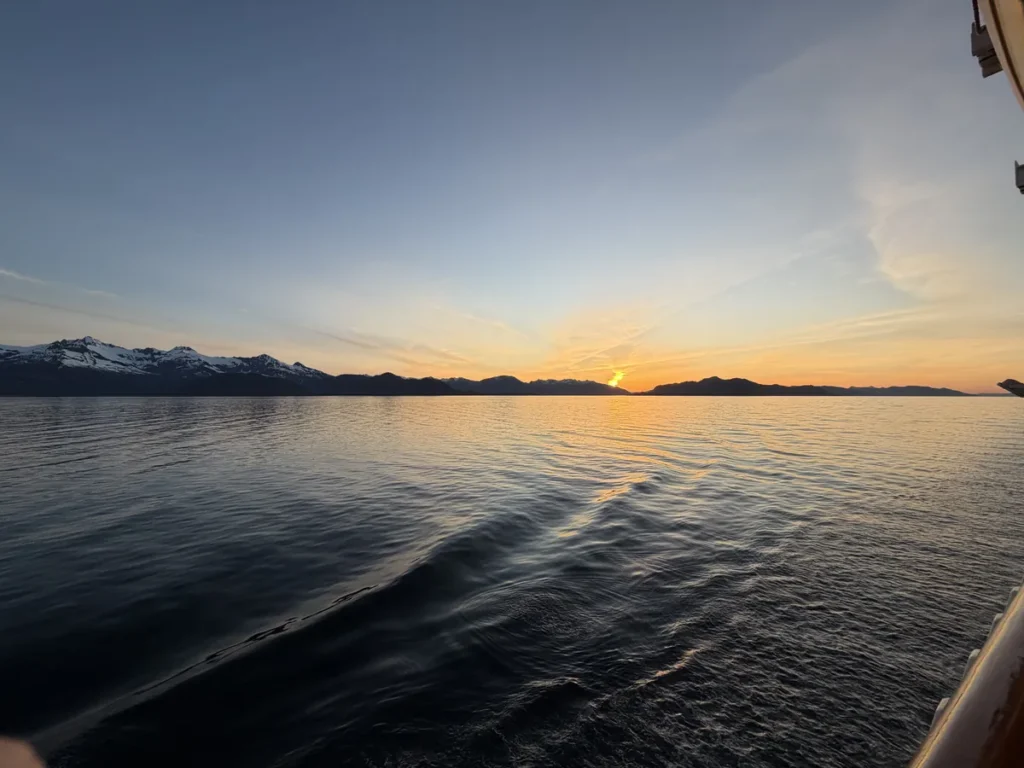
Disney programs the final sea day with a mix of farewell activities and the kind of low-key morning energy that suits the mood. If there were shows or activities you missed earlier in the week, this is the day to catch them.
It’s also the practical day. Doing laundry, packing, luggage tags, settling your onboard account, and the quiet negotiation of fitting everything back into bags that somehow held it all a week ago. Disney delivers disembarkation instructions and color-coded luggage tags to your cabin the night before. Read them. The process is smooth when guests follow the instructions and less smooth when they don’t.
The final sea day is also when the ship tends to feel most like itself. The excursion energy is gone. The glacier is behind you. What’s left is the dining room, the shows, the people you’ve been sharing the ship with all week, and the specific warmth of knowing the cruise is almost over. It’s worth slowing down and noticing it.
Disembarkation: Back to Vancouver
Day 8 is the logistics day. Disney’s disembarkation process is well-run. You’ll leave your bags outside your cabin the night before, have your final onboard breakfast, and depart the ship in waves based on your departure color and character. Customs in Vancouver is organized, though it takes time. If you have a late afternoon flight, you have options. If you’re on a morning flight, move efficiently.
We’d suggest not booking a flight earlier than noon if you can help it. Things can go wrong on disembarkation mornings in ways that are nobody’s fault, and having margin is better than having a very stressful taxi ride to the airport.
Life Aboard the Disney Magic in Alaska
The ship does not change because you’re in Alaska. The service, the food, the entertainment, it all runs the same way it would on a Caribbean sailing. What changes are the themes that are only available on an Alaskan cruise.
Daily Personal Navigator
Below are the original Personal Navigator distributed aboard the Disney Magic each day during our sailing. Select the the day below to view that days activities.
Day 1 — Vancouver Embarkation
Day 2 — At Sea
Day 3 — Glacier Viewing
Day 4 — Skagway
Day 5 — Icy Straight Point
Day 6 — Ketchikan
Day 7 — At Sea
Dining
The 7-night itinerary gives you enough rotations through the restaurants to develop real opinions about each of them. We’re not going to spoil all of that here since we have full dining reviews either published or in progress.
What we’ll say in this post is that the rotational dining structure works especially well on a longer sailing. Your serving team learns your preferences quickly, and by mid-voyage the experience starts feeling genuinely personal rather than logistically choreographed. That’s harder to achieve on a 3 or 4-night cruise. The 7-night format earns it.
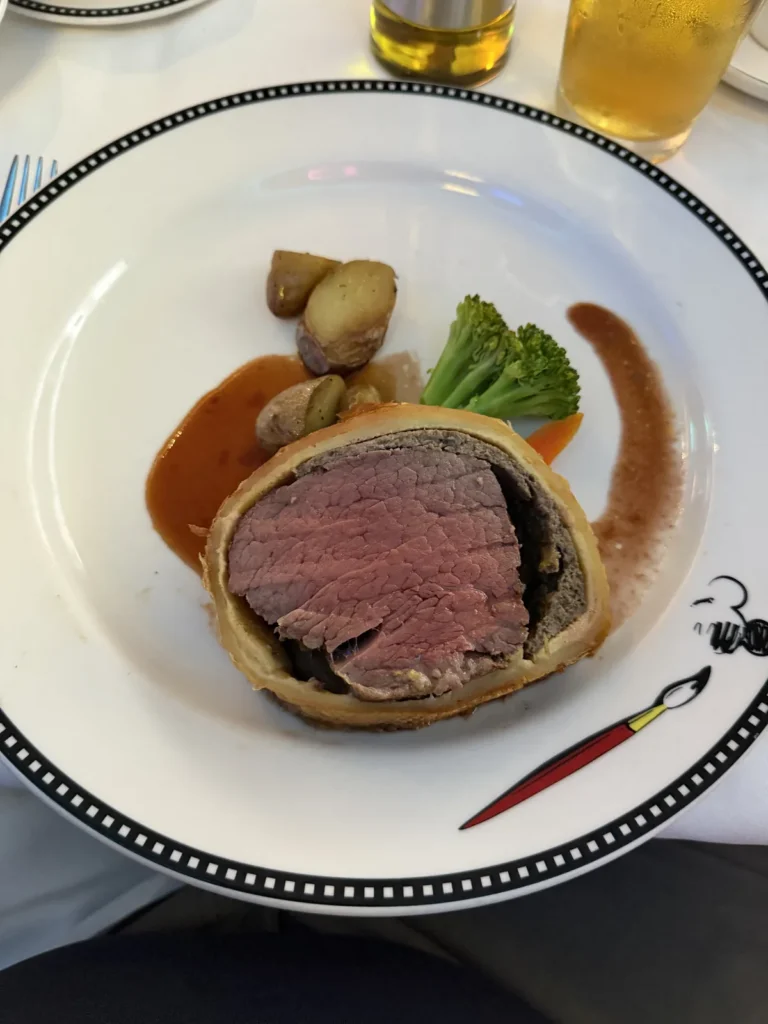
Cabanas, the buffet, remains the practical choice for breakfast and a reliable option for lunch on port days when you’re trying to eat fast and get off the ship. Room service handles the late nights. Palo, if you haven’t done the adult dining upgrade on a previous Disney sailing, is worth booking once on a 7-night. Do it on a sea day.
Entertainment
The Broadway-style shows in the Walt Disney Theatre are Disney doing what Disney does at a level that tends to surprise first-timers. The production values are genuinely high. Shows rotate through the sailing so you’ll see different performances on different nights.
The deck parties, the “Sail Away” party on embarkation day and the all new “For the First Time in Forever: A Frozen Sing-Along Celebration” are some of the various themed events during the week that scale differently in Alaska. Colder deck temperatures thin the crowd and change the energy. The Sail Away in Vancouver is still worth attending for the departure itself. The later deck parties are a judgment call based on how much you love standing in the cold cheering for Elsa.
Adult entertainment venues hold up well over a 7-night sailing. From guest singers in Keys, the piano bar, silent dance parties, 80’s music trivia challenge, and the magic sets in the adult lounge. The quieter options at Cove Cafe on sea day mornings all become part of your rhythm in a way that a shorter sailing doesn’t allow.
Inside Cabin Notes
We sailed in an inside cabin and it worked. Here’s the honest assessment.
Almost every cabin category on Disney Cruise Line shares the same core amenities. The one exception is the Standard Inside Stateroom, which skips the split bathroom configuration and has the least square footage on the ship. From there, each step up the ladder, Deluxe Inside, Oceanview, Veranda, Concierge, adds a bit more room than the category below it.
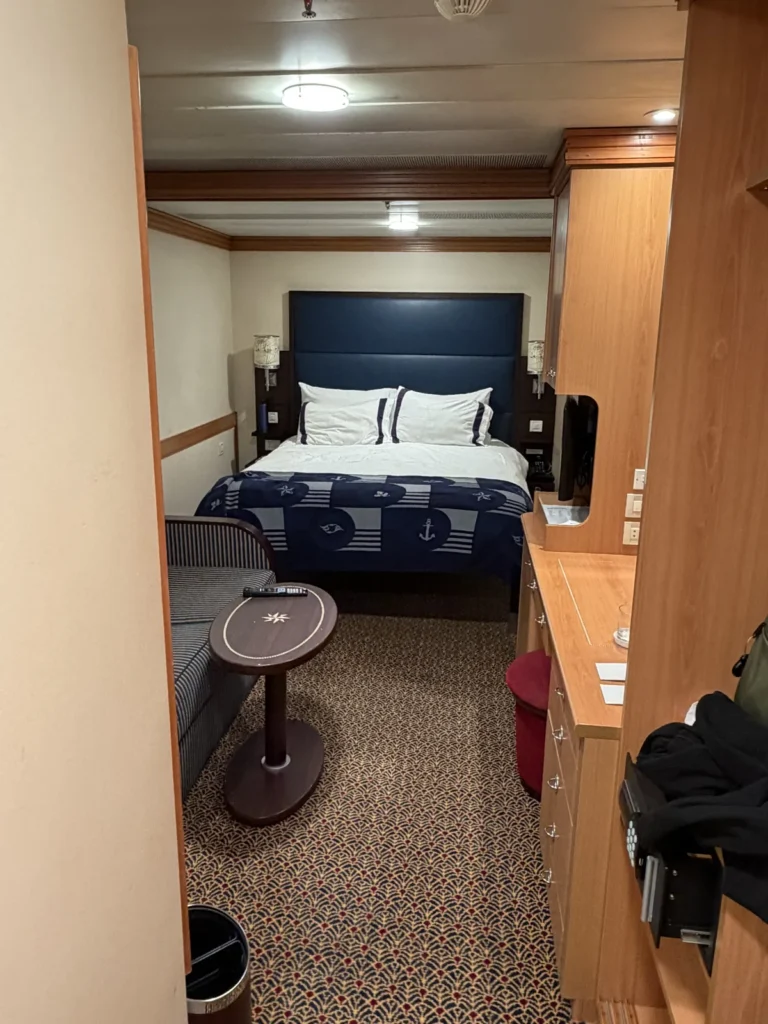
On an Alaska sailing, an inside cabin means in the morning your first view of the day is a TV screen instead of a fjord. That’s the real tradeoff. Everything else Disney does well across all categories. The storage is solid, the beds are comfortable, the shower works, and the split bathroom setup is genuinely useful once you’ve used it. But you’re still in a room without a window, and on a sailing where the scenery is half the point, that distinction matters more than it would in the Caribbean.
The verandah on an Alaska cruise is not primarily about having outdoor space. It’s about having a private vantage point from which to watch the world go by without putting on all your cold weather gear. If budget allows the verandah, take it. If it doesn’t, the inside cabin is not a compromise that ruins the experience. We made it work by being intentional about time on deck, and the deck views in Alaska are available to everyone on the ship.
What to Pack for a Disney Alaska Cruise
This is the section where we skip the generic “bring sunscreen and a swimsuit” advice and tell you what you actually need.
Layering System
Alaska weather requires a real layering approach, not just a light jacket thrown over a t-shirt, think like the layers of an onion.
Base layer: a moisture-wicking base layer for Glacier Day and cold port mornings. This is not optional if you’re planning to go on the glacier viewing excursion.
Mid layer: a fleece or insulated jacket that you can wear independently on moderate days or combine with your outer layer on cold ones.
Outer layer: a waterproof, wind-resistant shell. This is the piece that matters most. It doesn’t need to be expensive, but it needs to actually stop wind and water.
What to Definitely Bring
Gloves and a hat. Glacier Day will make both of these feel essential rather than precautionary. Bring lightweight, water-resistant touchscreen gloves.
Comfortable walking shoes with grip. Alaska port days involve uneven surfaces, occasionally wet boardwalks, and real terrain. Sneakers are fine. Flip flops are not.
Binoculars. This comes up in every Alaska cruise guide and it comes up in every Alaska cruise guide for a reason. Wildlife and glacier viewing from the ship are both dramatically better with magnification. A mid-range compact pair is sufficient.
Portable battery pack. Glacier Day will drain your phone battery faster than any Caribbean beach day. Cold temperatures accelerate battery drain. Bring a full-size backup.
Magnetic hooks. Standard Disney cruise move regardless of itinerary, but worth including. On the Disney Magic and Wonder, not all surfaces are magnetic like the newer ships. The cabin doors and ceilings are magnetic and extra hooks expand your storage meaningfully in a small space.
Motion sickness medication. The Inside Passage is protected water and generally calm. However, there are times when the ship will be exposed to the open ocean and wind will cause the ship to rock. If you’re susceptible to motion sickness, come prepared. The ship’s medical center carries remedies, but you’ll pay a premium for the convenience.
What to Skip
A full wardrobe of resort wear. You will not be in weather that warrants it, and Alaska formal nights have a different energy than Caribbean formal nights. A pair of dockers or slacks and a polo shirt holds up fine for formal night. I over packed with too many shoes. I would have done fine with just my hiking boots and black tennis shoes.
There is an assumption that the ship’s gift shop will cover any gear gaps. For essentials like gloves, hats, and rain gear, come prepared. While the onboard options with their Disney Alaska theming are a must have, they are limited and can be pricy. With that said, the Disney Alaska fleece cruise jacket is a must buy.
Planning Your Disney Alaska Cruise
The Booking Window
Alaska sailings for Disney sell early. Summer dates, June through August, are the peak season and the most popular. If you’re targeting a specific sailing, booking 12 to 18 months in advance is not excessive, particularly for concierge staterooms and verandah categories, which go first. Inside cabins hold availability longer, but prices generally don’t improve as the sailing date approaches the way they sometimes do on Caribbean itineraries.
Castaway Club status (Disney Cruise Line’s loyalty program) affects your booking window. Silver, Gold, and Platinum members get priority booking access before the general public, which matters for Alaska sailings where demand reliably exceeds supply.
The Ship
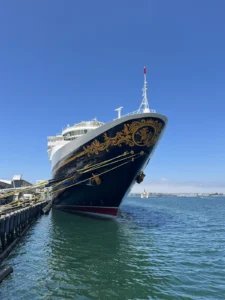
The Disney Magic has just started sailing the Alaska itinerary for the first time in 2026. She’s the oldest ship in the fleet, launched in 1998, and refurbished multiple times since. The ship is smaller than the Wish or the Fantasy, which means fewer guests and a different energy. The Magic has a genuinely classic Disney feel that the newer ships, with their more modern aesthetic, don’t fully replicate.
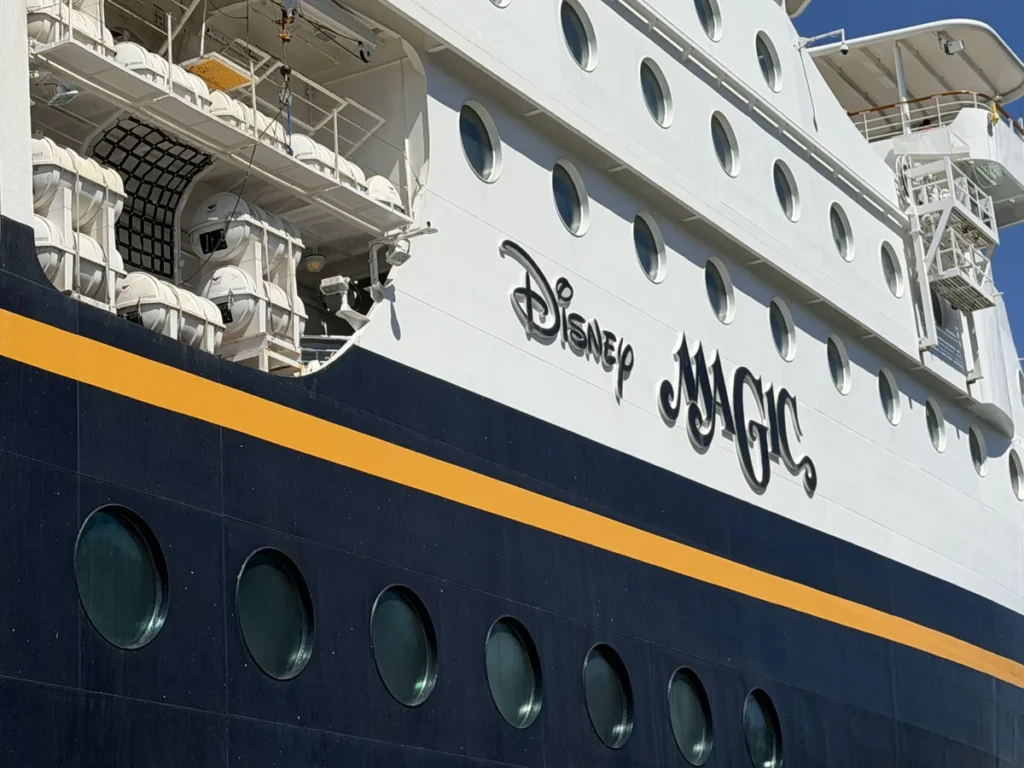
If you’ve only sailed the Wish and are expecting that level of newness and amenity density, the Magic is a different experience. The Disney Magic’s design aesthetic is deliberately rooted in the golden age of ocean liners. Roughly the 1920s–1930s Art Deco era, think Titanic’s slightly later and more glamorous cousins like the RMS Queen Mary, SS Normandie, and SS United States. If you appreciate a ship that feels like it has history and has been well-maintained through it, the Magic delivers.
Cabin Category for Alaska
We covered the inside cabin experience above. The broader guidance:
Verandah is worth the premium in Alaska in a way it sometimes isn’t on shorter Caribbean itineraries. You’ll use it. The fjord transit, the sunrise approach to ports, the ability to step outside in a robe and see what’s happening without committing to full cold-weather gear, all of that has real value on a 7-night Alaska sailing.
Concierge is a significant jump in price. The benefits, priority boarding, dedicated concierge team, elevated dining, reserved viewing areas on Glacier Day, are real and meaningful if the budget supports it. The reserved Glacier Day viewing area is probably the single most tangible concierge advantage specific to the Alaska itinerary.
Ocean View is the category that gets the least attention in Alaska discussions, and that’s a little unfair. You get a window, not a sliding door, so you’re watching the scenery rather than stepping into it. On a Caribbean itinerary that’s a fine trade-off. In Alaska, where you might wake up to a fjord outside the glass at 6am, it genuinely earns its price difference over inside. The limitation is obvious enough. You can’t step out, you can’t feel the cold air, and during Glacier Day the deck is where you want to be anyway. So ocean view makes the most sense if the inside cabin feels claustrophobic but the verandah premium is a stretch.
Inside cabin works if you’re strategic about being on deck during the moments that matter.
Excursions: Book in Advance
The short list of excursions worth booking before you sail rather than waiting until you’re in port:
- Glacier Day: Glacier explorer via tender boat.
- Skagway: White Pass and Yukon Route Railway. Sells out. Book it.
- Icy Strait Point: Whale watching. Limited boats, strong demand.
- Ketchikan: Misty Fjords seaplane, if your budget runs to it. Everything else in Ketchikan can be done independently.
Frequently Asked Questions
Is a Disney Cruise Worth it for Adults without Kids?
Yes. Arguably more so. On our cruise over half of the passengers were adults with no kids. Alaska rewards guests who can set their own pace, choose excursions without negotiating with children, and appreciate scenery and wildlife as the primary entertainment. The adult spaces on Disney ships work well. If you’ve been on the fence about Disney because you’re an empty nester and assumed it was primarily a family product, Alaska is a strong case for reconsidering.
Which Side of the Ship is Best for Glacier Day?
The short answer is Deck 10 forward for the approach and the glacier itself. The ship positions itself and spins so the glacier is visible from both sides of the ship at some point during the visit, but the forward deck is the best overall position for the full Endicott Arm transit. Deck 4 is a great option for a less crowded space. Most people will be on deck 10 for glacier viewing and pictures with the characters in their Alaska attire. For the fjord walls and waterfalls, both sides of the ship have excellent views. Get to Deck 10 forward early if glacier positioning matters to you.
How Cold Does it Actually Get on Glacier Day?
Cold enough that you’ll want everything in the packing list. The air temperature inside the fjord on glacier day is typically in the 40s Fahrenheit, but the wind chill on an exposed deck makes it feel colder. The tender boat ride to the glacier is colder than on the ship deck. Gloves are not optional. I was glad to have my gloves and beanie on the glacier viewing excursion.
Do You Need to Book Shore Excursions in Advance, or can You Wing It?
It depends on the port. Skagway’s White Pass Railway and Icy Strait Point whale watching should be booked before you sail. They sell out and the shore excursion window on the ship won’t save you if those are gone. Ketchikan is almost entirely walkable without a booking. Icy Strait Point’s ZipRider sells out too if that’s on your list. For everything else, you have flexibility.
Can You See Whales from the Ship, or Do You Need an Excursion?
You can see whales from the ship. We saw humpbacks and Orcas from the railing on sea day transits. An excursion puts you closer, keeps you on the water longer, and significantly increases your odds, but ship sightings happen regularly in Alaska waters. Bring binoculars and spend time on the open decks.
Is Alaska Better Than the Caribbean for a Disney Cruise?
They’re different enough that “better” is the wrong comparison. Alaska is more active, more outward-facing, more weather-dependent, and more likely to produce a moment that you talk about for years. The Caribbean is warmer, more relaxed, and gives you Castaway Cay, which has no equivalent on the Alaska run. If you’ve done the Caribbean multiple times and want something genuinely different, Alaska is the answer. If you want reliable warmth and beach days with Disney service, the Caribbean is still excellent.
Is Concierge Worth it for the Alaska Sailing?
If you can afford it without strain, the reserved Glacier Day viewing and the priority boarding make it more defensible on Alaska than on a shorter Caribbean itinerary. If the concierge premium is significant financial pressure, a verandah cabin gives you most of the experience at a meaningful step down in cost. Oceanview and Inside cabins gives you the sailing itself at the lowest entry point. All four versions of the trip are worth taking.
What is the Single Thing You Would do Differently?
The single thing I would do differently is plan for more excursions and probably sail a little later in the Alaska season. We had an incredible cruise, and I do not regret the trip at all, but Alaska is one of those itineraries where the ports really matter. Looking back, I wish we had built more room into the budget for excursions so we could experience more of what each stop had to offer.
I also think I would choose a later sailing next time. Our cruise was still beautiful, but going later in the season may have given us a slightly different experience with wildlife, scenery, and port activities. Alaska is not the kind of cruise where I would want to just stay on the ship and treat the ports as background. Next time, I would make the excursions a bigger part of the plan from the beginning.
Do You Need a Passport for a Vancouver Round-Trip Sailing?
Technically, U.S. citizens can sail on a closed-loop cruise (departing and returning to the same U.S. or Canadian port) with a passport card rather than a full passport book. However, if you are flying into Canada, you will need a passport. This includes children of all ages. Airlines are very strict and will not let you or your children fly into another country without a passport. In practice, we carry a passport. The Skagway excursion goes into Canada and if you would like to exit the train, you will need your passport. Travel disruptions that might require flying home mid-trip require a passport. Just get the passport.
Our Final Verdict
We went into this sailing knowing Alaska would be beautiful. Most people do. The scenery reputation precedes itself in a way that almost makes you skeptical, because things that are supposed to be spectacular rarely survive the expectation they generate.
There is a moment inside Endicott Arm Fjord, when the mountains are close enough on both sides that you can see the individual waterfalls dropping off the ridgelines above you and the small icebergs are floating past the hull with a slow, indifferent pace, and the ship feels completely and appropriately small. That moment doesn’t happen on a Caribbean sailing. It doesn’t happen in many places. We got it, and it was worth every dollar to be standing there.
Disney does Alaska well. Not just adequately, but well. The naturalist programming, the tender operation at the glacier, the way the crew manages a ship full of guests trying to be in four places at once on Glacier Day. It’s organized and it works. The food, entertainment and service didn’t dip. They don’t, on Disney. That’s the value proposition, and it held.
Who should book this sailing: Disney Adults who want something genuinely different. Empty nesters looking for a vacation that rewards attention and patience. Anyone who’s done enough Caribbean sailings and is ready for the next thing.
Who should book a Caribbean sailing instead: guests who need warm weather and beach days to feel like they’re on vacation. Guests with young children for whom Glacier Day is a hard sell. Anyone who wants Castaway Cay, because nothing on the Alaska run replaces it.
Our honest recommendation is to book Alaska before you’ve convinced yourself it’s too expensive. It probably is too expensive in the way that any remarkable thing costs more than the ordinary version. Go anyway.