Icy Strait Point Disney Cruise: Explore Hoonah Culture
This post contains affiliate links, including Amazon affiliate links. If you book or buy something through one of them, I may earn a small commission at no extra cost to you. As an Amazon Associate I earn from qualifying purchases. Captain J.J. notes that First Mate Jon recommends only what he has personally used and would choose again. This is the minimum acceptable standard. Full disclosure here.
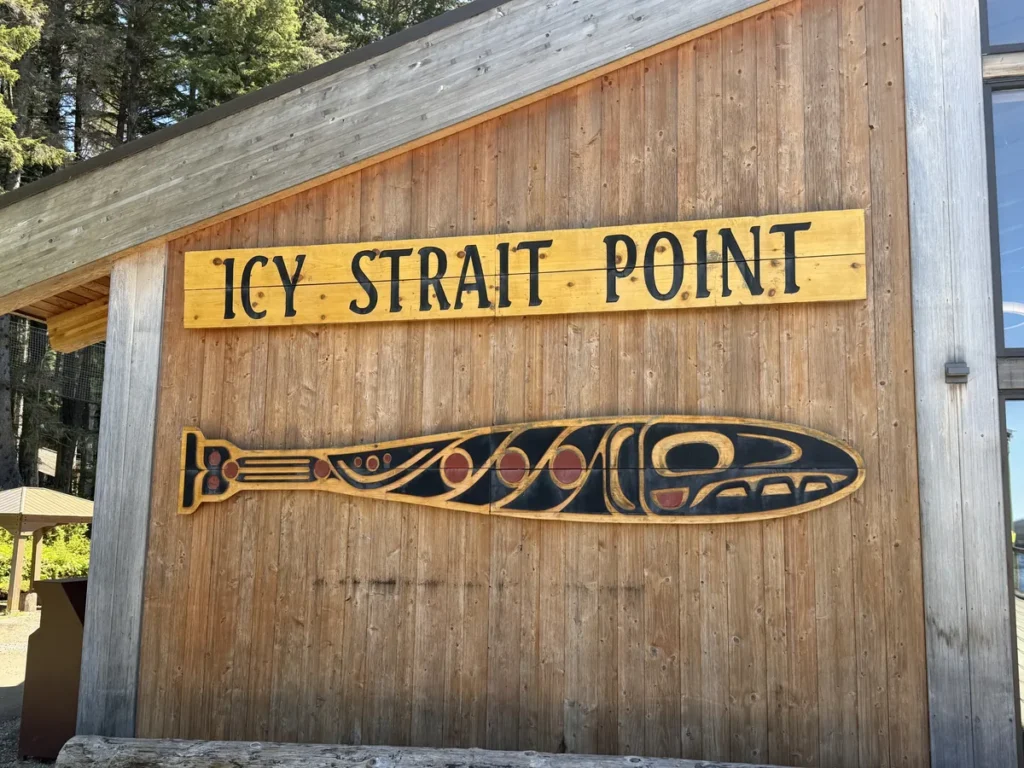
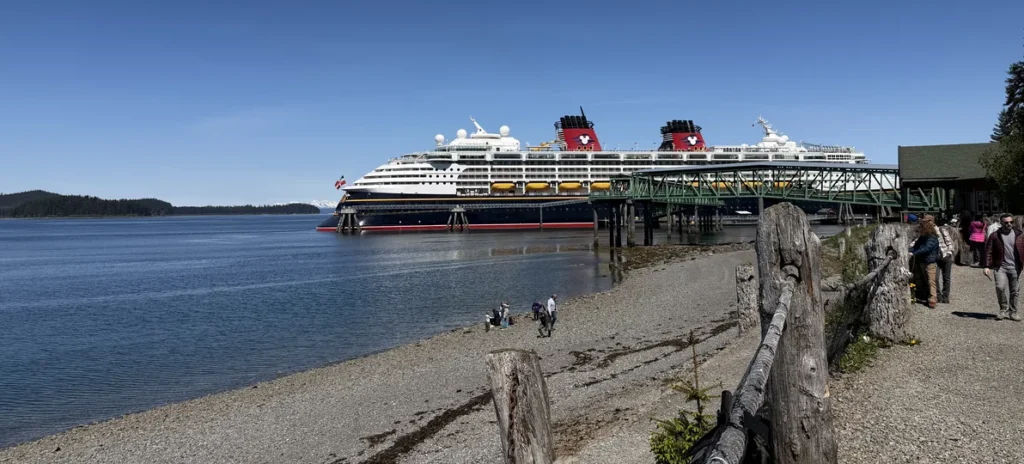
The Disney Magic docked here on our Alaska sailing, and I’ll be honest I didn’t know much about the place going in beyond “zipline” and “whales.” The port was something that felt different from every other cruise port I’ve walked off a gangway into. The story of Icy Strait Point is the story of the Huna Tlingit people, whose roots stretch deep into the land. That’s not marketing language. You feel it the moment you walk into the visitor center and see Huna Tlingit tribal members gathered around the fire pit outside.
Icy Strait Point isn’t the port that drops you into the middle of a real Alaskan town. It’s purposefully designed for cruise visitors. But it’s designed by the people who live here, for the benefit of the people who live here. That changes the feeling of it considerably. Moreover, the wilderness surrounding it is as real as Alaska gets.
A History Worth Knowing
The Huna, a Tlingit tribe, have lived in the Icy Strait area for thousands of years. The community of Hoonah sits about 30 miles west of Juneau on Chichagof Island, and the Huna Tlingit people settled there after migrating from Glacier Bay, a place they had called home long before that.
The cannery came later. In 1912, the Hoonah Packing Company built the first cannery in the area, and ownership traded hands several times before the Icy Strait Salmon Company purchased the property in 1932. At its peak, the operation was remarkable, the Alaska Daily Empire reported 115,000 cases of fish packed in a single season. Battling rapidly changing weather, notoriously tricky tidal currents, and even icebergs, Hoonah seine fishermen were renowned for catching salmon in the passes that connect Icy Strait and Cross Sound. It was hard, skilled, dangerous work. The last year of operation for the Hoonah cannery was 1953.
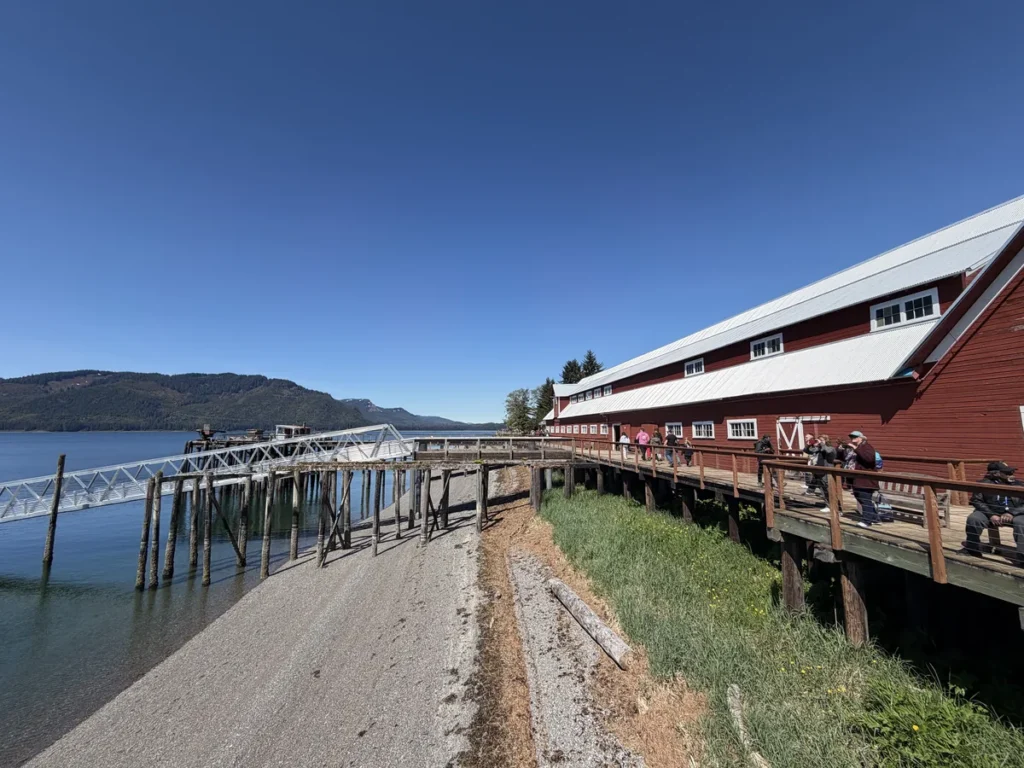
The building sat shuttered for decades. Then the local Alaska Native corporation, Huna Totem Corp., purchased and rehabilitated the facility and built something unusual. The only privately owned cruise destination in Alaska, owned by approximately 1,350 Alaskan Natives with aboriginal ties to Hoonah and the Glacier Bay area. Cruise ships started coming in 2004. Every dollar you spend here flows back into that community. That distinction matters, and it’s one of the reasons Icy Strait Point feels different from the moment you step ashore.
Captain J.J. — Chief Officer
I have logged Icy Strait Point as the most culturally honest port on this itinerary. Every dollar spent here stays here. I find this arrangement entirely satisfactory.
What to Do
The honest answer is that Icy Strait Point is built for activity, and there’s a version of this port for every pace of traveler. If you want the headline experience, outside the restored cannery sits the world’s largest zip line at 5,330 feet long, featuring a 1,300-foot vertical drop. It’s a 90-second ride that ends at the water’s edge and is exactly as dramatic as it sounds. I didn’t ride it as my aversion to the heights was enough to say no thank you . We watched other people ride it and felt a reasonable combination of admiration and relief. If that’s your thing and for many people, it absolutely is, book it in advance. It fills up.
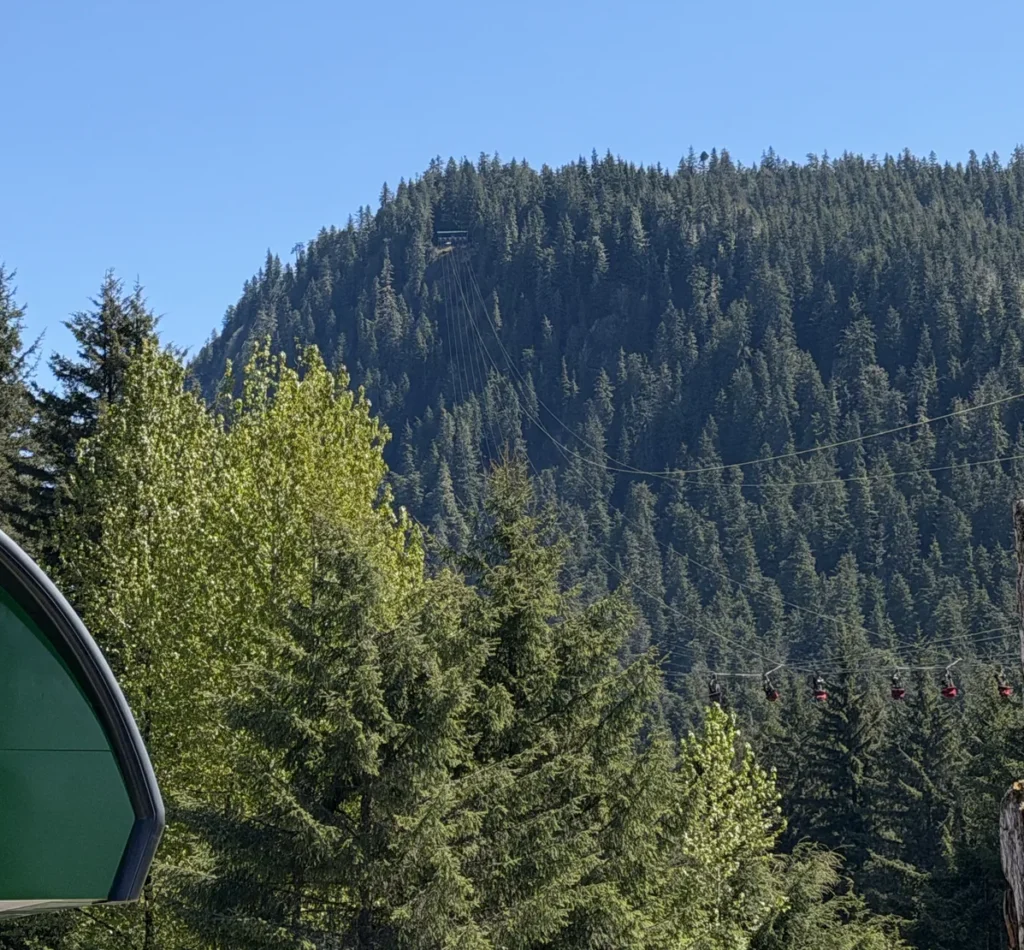
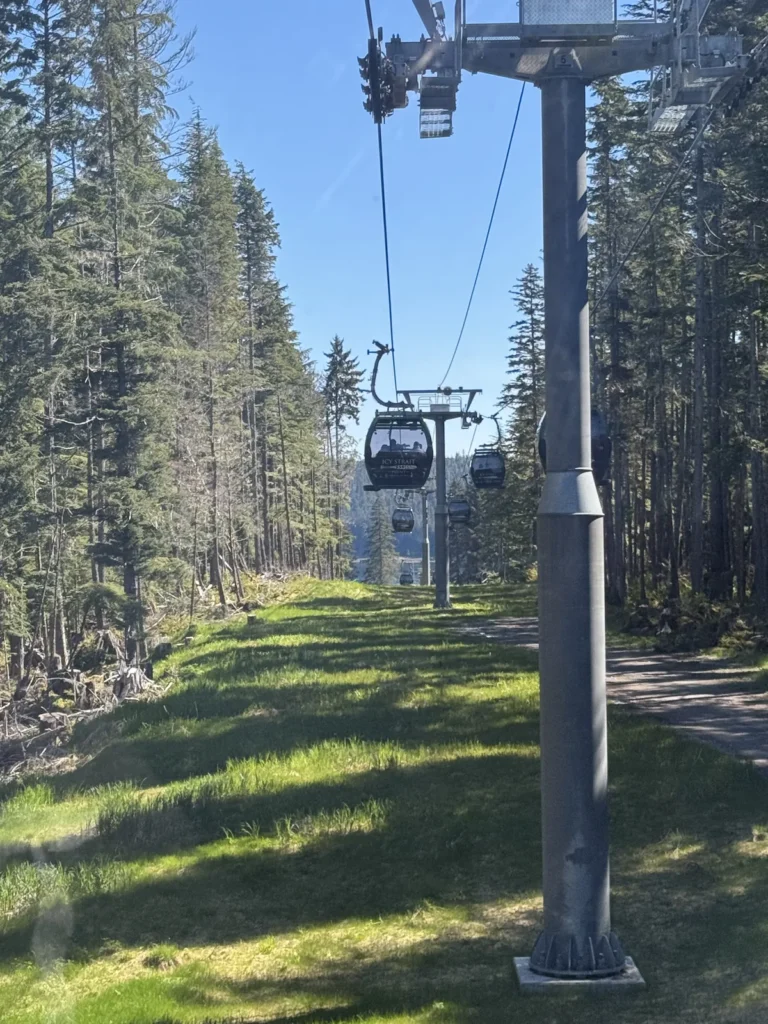
For something slower, there are actually two gondola rides worth knowing about. The first is free and carries you over the ropes course, a nice low-key way to get your bearings and take in the canopy below. The second cost $49.95 and takes you up to the mountaintop where the zip line riders launch from. If you have a fear of heights, worth knowing that the ride is quite steep as it climbs the mountainside. I didn’t ride it for obvious reason noted before, but from what I’ve read the views over the Inside Passage are the kind that make you stop mid-sentence.
Adventures also include ATV excursions into the Tongass National Forest, a Tree Top Adventure Park and Ropes Course, and Chichagof Island Jeep Expedition tours. Chichagof Island is home to the largest brown bear population in the world, approximately three bears per square mile. Several excursions take you in search of them on foot or by vehicle. For out next Alaska sailing, we are going to book one of the bear viewing tours.
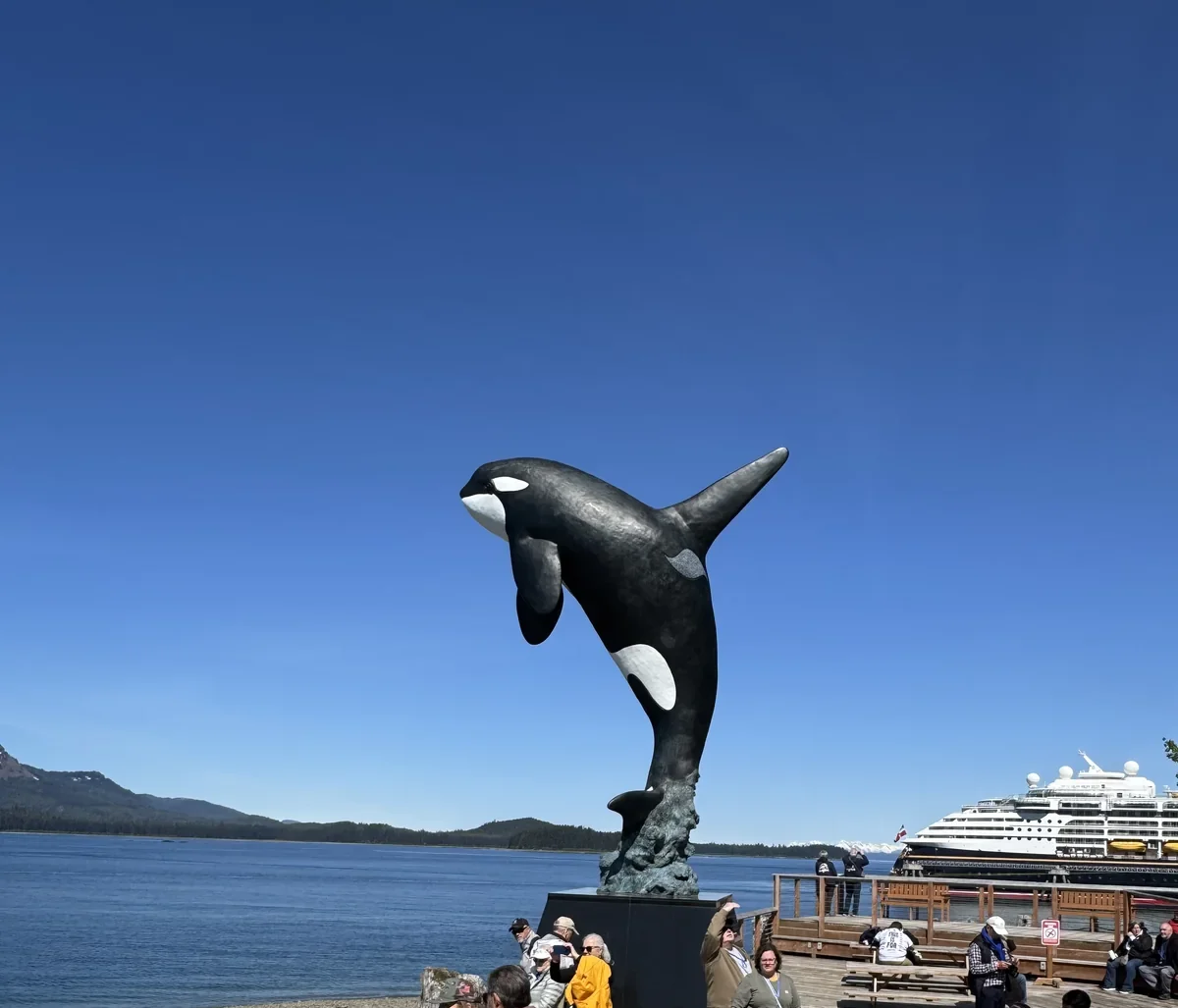
Humpback whales arrive in the Icy Strait starting in May, drawn by nutrient-rich waters. You don’t necessarily need a formal excursion to see them as people spot them from the beach and even on the seaward side of the ship while it is pier side. Furthermore, whale watching tours get you out on the water with knowledgeable guides and better sightlines. When we got off the ship, the whale watching tour boats were tied up to the pier across from the ship, making it an easy excursion to do.
For those who want to stay closer to the cannery, the cultural experiences are genuinely worth your time. A group of Huna Tlingit performers in traditional regalia share their history and culture through song, dance, and storytelling. The Heritage Center Museum is free to enter and covers Tlingit history with real depth, prior to incorporating local stories into programming, Icy Strait Point met with local elders and clan leaders to learn what they were willing to share, with elders observing the telling of stories and making corrections to improve accuracy.
Food and Dining
Seafood steals the show at Icy Strait Point, with British-style fish and chips made with Alaskan halibut being one of the most popular items on the menu.
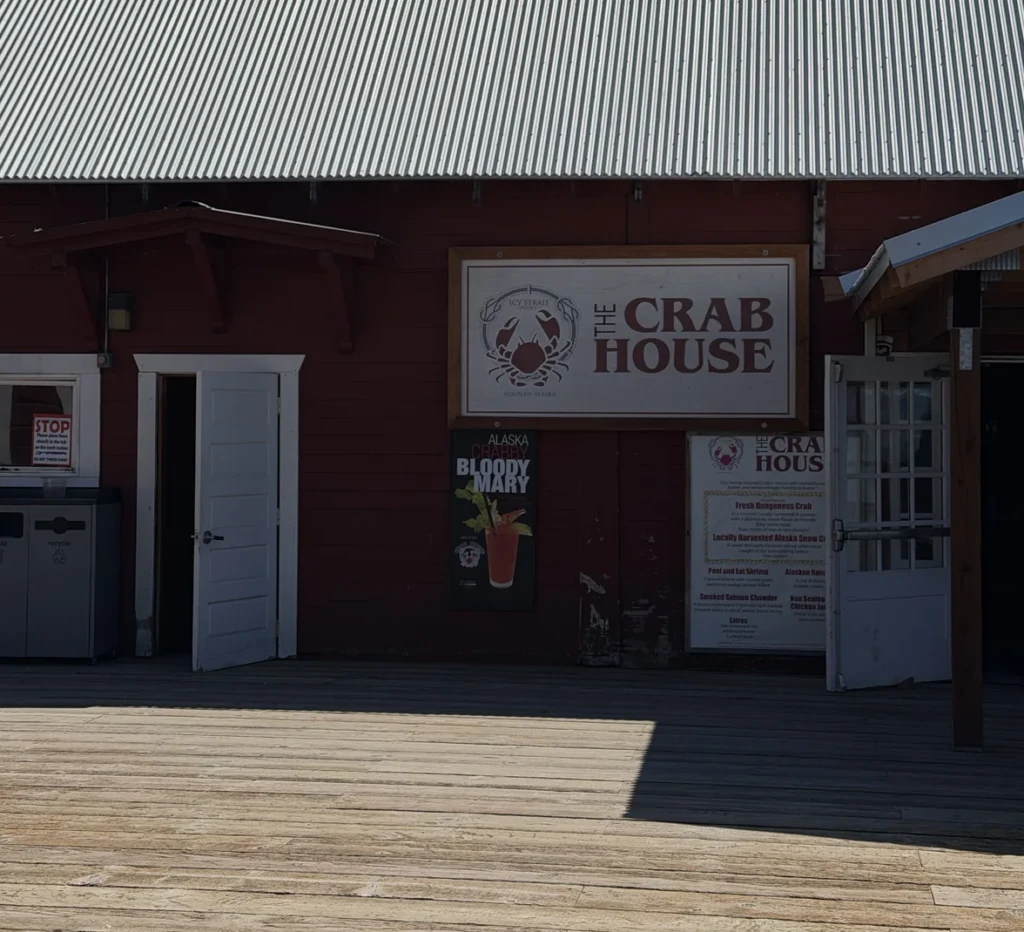
At the Crab Station, visitors can enjoy fresh Dungeness crab caught right off the coast while watching whales and sea lions pass by. There’s also the famous Alaska Crabby Bloody Mary if you’re inclined toward that sort of thing at 10 AM in the morning. No judgment. We got a half Dungeness crab that we split between Gynnie and her mom. The Crab Station had king, snow, and Dungeness crab to choose from. A funny side note, I thought for sure an Alaskan cruise would feature crab in the buffet, but I never did find any. So, this was out first crab of the cruise.
The Cookhouse Restaurant sits inside the historic cannery building itself, and the setting alone is worth stepping in for. The specialty here is halibut and chips, made with fresh halibut pulled from the local dock, hand-cut and fried to order. They also run a lineup of smash burgers if seafood isn’t your thing. It’s a good spot to eat without making a big production out of lunch.
Duck Point Smokehouse is a different vibe entirely. It sits out near the ZipRider and Adventure Center on a covered oceanfront deck with panoramic views across Port Frederick. The menu leans into smoked salmon dishes and brick-oven pizzas, and the guest favorite is local salmon grilled to order. They also pour signature cocktails. If you time it right, you can finish your excursions and settle in here with a drink.
Captain J.J. — Chief Officer
I assessed the Dungeness crab and filed my verdict immediately. Fresh, properly cooked, and served with a view of open water. Order the crab.
Shopping
Before you leave the cannery building, budget some time for the shops inside. There are several, and every one of them is Alaskan or locally owned and operated. The bigger shops carry the signature Alaska souvenirs you’d expect, but the smaller shops tucked off the hallways are where the more original finds live. A few worth knowing by name are Fishbone Gifts, Brenner’s, and Dei L’e.ann, which carries works by Huna Tlingit artists alongside soaps and salves from Tlingit Botanicals.
If you’re shopping for authentic Native artwork, two seals are worth knowing before you buy. The Silver Hand Insignia is your strongest guarantee. It’s a black oval with a silver hand and the words “Authentic Native Handicraft from Alaska,” and it means the piece was handcrafted by a documented Alaska Native artist.
The Made in Alaska Bear Seal, which shows a mother bear and cub, tells you the item was manufactured or assembled in Alaska, but it doesn’t specifically indicate indigenous origin. If supporting Native artists is the point, look for the Silver Hand first. The shops at Icy Strait Point make that easier than most ports since this is not a gift shop gauntlet designed to separate you from your money. It’s a collection of small local businesses that genuinely reflect the community around them.
Our Experience in Icy Strait Point
For us, Icy Strait Point was a relaxed half-day. We walked through the museum, browsed the shops, watched the shoreline for whales and wildlife, spotted bald eagles that have nested in the area, and spent a good chunk of time watching zip line riders come barreling down the mountain. That last part was more entertaining than I expected. The ZipRider makes a sound like a jet engine on final approach, screaming in from above before it hits the landing zone. Worth watching even if you have zero intention of riding it yourself.
We didn’t get into any of the bigger excursions this time, and honestly that’s on us. With that said, if you book a whale watching tour or one of the bear viewing adventures, Icy Strait Point has the potential to fill a full day easily. There’s enough dining to keep you fed between activities, and the fresh crab is as good as advertised.
Weather worked in our favor. We saw around 62 degrees and sunshine, which for southeast Alaska in late May feels like a gift. If I’m being honest though, I think late summer, August into September, probably delivers warmer temperatures and better wildlife activity. We came away with a list of things to do on the next visit, which is maybe the best thing you can say about a port.
If you want to stretch the day further, there’s a paved pathway from the port that runs about a mile and a half into the town of Hoonah itself, where there’s more to explore beyond the cannery grounds.
If this helped you plan a better cruise, there’s more where that came from. Subscribe to The Magical Navigator and get new posts, port tips, and the occasional unsolicited opinion from a toy giraffe delivered straight to your inbox.
Captain J.J.’s Verdict
⚓⚓⚓ — Solid. Would revisit.